

Table of Contents
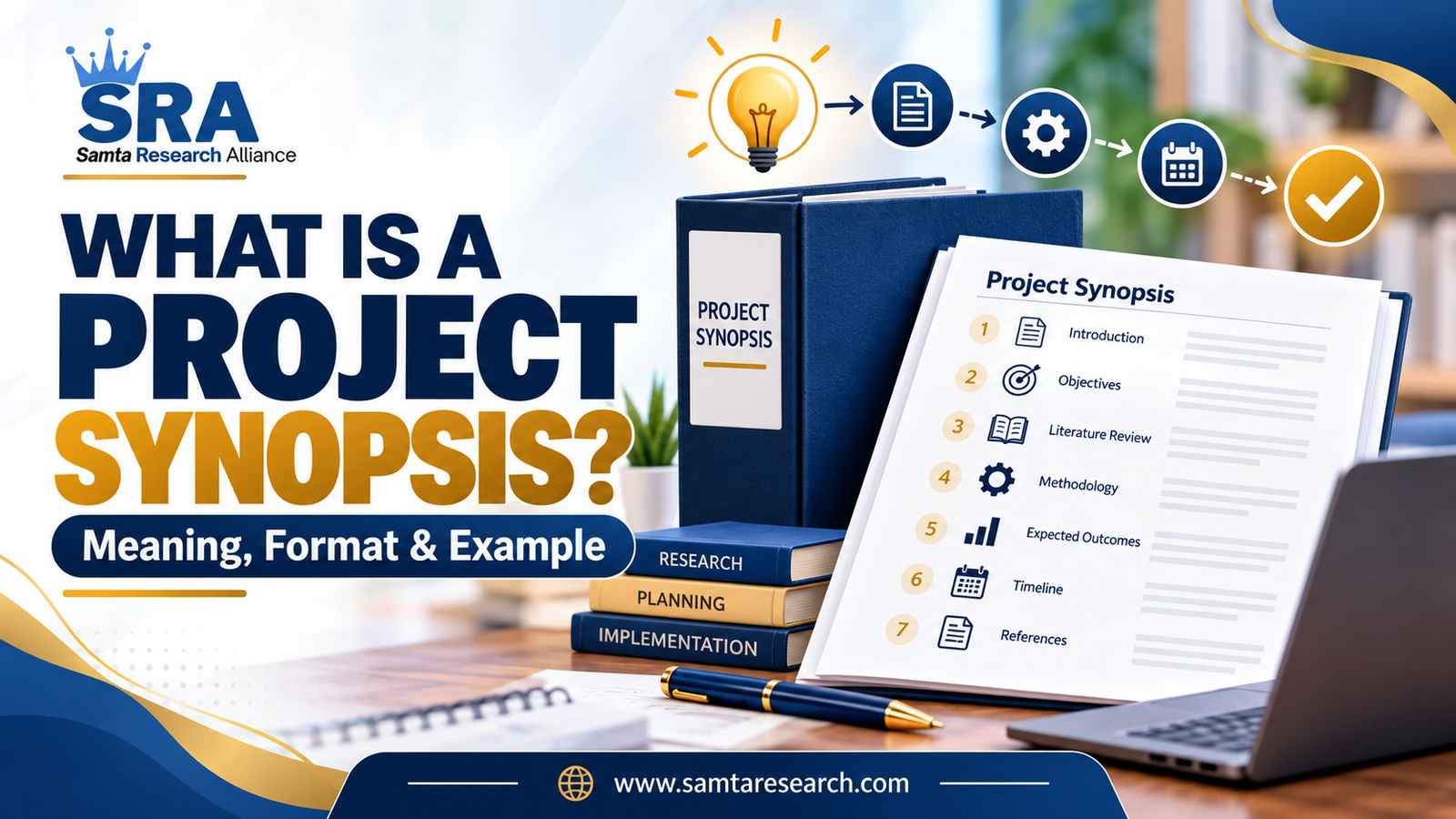
ToggleWhat Is Synopsis of a Project? Meaning, Format, and Example
You’ll almost certainly be asked for a synopsis when beginning any academic or professional endeavor. If you are not sure about what is meant by “synopsis of a project”, then read this guide to understand the meaning, purpose, and a standard format of a synopsis that will be accepted.
What Is Synopsis of a Project?
A project synopsis is a brief, concise description of a proposed project. It includes topics, objectives, methodology, expected outcomes and timeframe so that the supervisor or committee can determine if the project is clear, relevant and feasible before work is started.
Consider it a project’s “first impression”.
This is not the complete report. It’s a blueprint that demonstrates that you have an idea that’s focused and a plan that’s realistic. Generally, the project synopses are between 500 and 1,500 words, but the length may differ from one institute to another.
Why Is a Project Synopsis Important?
A project synopsis is critical because it has the potential of getting your topic approved, it gives you a sense of your goals, and it provides you with a project plan—thus saving time and scope creep.
- It assists supervisors to make feasibility decisions promptly.
- It makes you explicitly state your problem and objectives.
- It serves as a reference throughout the project.
- It’s frequently required for college and university approval and PhD study.
What Is the Format of a Project Synopsis?
There are eight sections in the standard project synopsis format; they are: title, introduction, problem statement, objectives, methodology, expected outcomes, timeline, and references.
Section | What to include |
Title | Short, specific, and descriptive |
Introduction | Background and context of the project |
Problem statement | The issue the project will address |
Objectives | 3 to 5 clear, measurable goals |
Methodology | Tools, techniques, data sources, and approach |
Expected outcomes | What the project will deliver or prove |
Timeline | Phases and deadlines, often as a table |
References | Sources cited in your chosen style |
Word limits and mandatory headings vary from university to university, so always refer to your university’s guidelines! If you want an in-depth explanation, check out our guide to the full synopsis format.
Short Example of a Project Synopsis
Title: Azharul Islam, Sheikha Rahim, Syed Shafiq, and Mohammad Ashrafuzzaman Rony
Introduction: There has been a significant increase in the use of social media among students, and there are concerns about the impact on attention and academic performance.
Objectives: What is the daily social media usage amount among undergraduates, and how is it correlated to study time, and what are some suggestions for a balance in using social media?
Methodology: Structured questionnaire was used to collect data from 200 students and basic statistical tools used to analyze the data.
Expected outcome: Listening for evidence of the impact of social media on students’ study habits and offer recommendations.
Timeline: 4 months (literature review, data collection, analysis and report writing).
What Is the Difference Between a Project Synopsis and a Research Synopsis?
A project synopsis presents a practical or applied project and the outcomes of the project, whereas a research synopsis presents a scholarly project which has to leave a gap in the literature and advance the knowledge base.
Feature | Project synopsis | Research synopsis |
Purpose | Plan a practical project | Propose original research |
Literature review | Brief or optional | Detailed and required |
Typical length | 500 to 1,500 words | 1,000 to 3,000 words |
Used for | College projects, internships, dissertations | PhD and advanced research |
How to Write a Good Project Synopsis
- Choose a focused topic. Narrow ideas are easier to complete and easier to approve.
- Define the problem first. Everything else should connect back to it.
- Write measurable objectives. Use action verbs like measure, compare, design, or evaluate.
- Keep the methodology realistic. Match your plan to your time, budget, and resources.
- Stay concise. Every sentence should earn its place.
- Proofread and get feedback. Ask your guide or a peer to review before you submit.
Common Mistakes to Avoid
- Choosing a topic that is too broad
- Writing vague objectives that cannot be measured
- Skipping the methodology or timeline
- Ignoring the university’s format guidelines
- Copying content, which risks plagiarism flags
Frequently Asked Questions
It is a brief summary of what you plan to do in a project, why you are doing it, and how you will do it, written before the project starts.
Usually 500 to 1,500 words, but check your institution's requirements.
A synopsis outlines a project you plan to do. An abstract summarizes a project or paper that is already complete.
Title, introduction, problem statement, objectives, methodology, expected outcomes, timeline, and references.
Typically your project guide, supervisor, or an academic committee, who approve it before you begin.
Final Thoughts
With the information presented above you’ll understand that a synopsis is more than just paper. It focuses your thoughts, makes your plan practical, and helps you to get a better start on your project from beginning to end. Use the same pattern as above, and remain concise and on-topic, following your university’s guidelines.
Looking for some assistance in writing or improving your project synopsis?
Samta Research Alliance is a resource for students and researchers at all levels. Call us to get started!
